


December 8, 2011:
Pete’s Place: Getting the Most Out of Your Winter Garden
Your Fall gardens should be in full swing and you should be enjoying a lot of delicious rewards at the table. At this time, I’d like to emphasize the practice of repeat plantings of these same crops, to extend that harvest as long as possible.
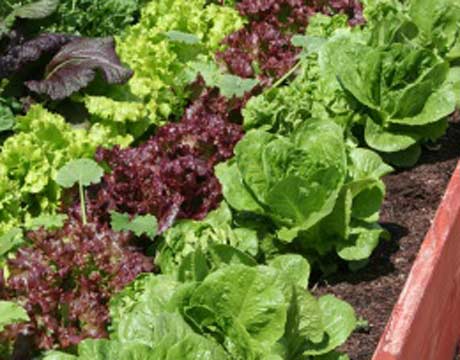
Leafy greens are a good cold-season crop and make a healthy addition to your holiday feasting. Replant now for multiple harvests.
One of the biggest advantages of our long Fall-Winter-Spring cool season is that we can repeatedly plant to stagger the harvest. If there is something you really use a lot of, say lettuce, plant some more every two to four weeks throughout the winter. This assumes you have sufficient space to do so, of course. This best applies to quick-growing crops that need only about 10 weeks or less to mature. Other examples are green onions, arugula, bok choy, spinach, mustard, radishes, or any salad mix ingredients.
It could also apply to longer-growing crops like peas or the cabbage family (broccoli, cauliflower, kale, collards, etc.), but one must be more careful with the timing in these cases. Your goal is to have the crop finished before hot weather arrives in earnest – let’s call that roughly May 1st. But April is not exactly ideal for these crops to be finishing up, either. I would recommend not seeding peas or cabbage family crops after December. For Brussels sprouts, which take so long, I’d move that back even a month earlier. If you are setting out good sized plants, then anytime through January is probably safe for all but the Brussels. (Peas are direct-seeded.)
Be sure to fertilize well between crops. If necessary, treat each row as a separate entity and add more fertilizer wherever you are replanting.
In terms of the winter garden, it should be clear that what I’ve said does NOT apply to warm season crops that are still around, unless your goal is March transplanting (see next paragraph). Since our coldest weather is often in January and February, we do not want to be planting out anything that is cold-sensitive at that time.

Start warm-season crops - like tomatoes and peppers - in December and January, but make sure you can give them protection from cold Winter nights.
You can and should, however, start seeds during the winter for warm season crops that transplant well. But plan on this taking up to 8-10 weeks from seed to transplant in the cool conditions. So this would be for the Spring garden, seeding in December or early January, with seedlings going into the ground in March. The main examples are tomatoes and peppers. Just be sure that you can provide cold protection for these babies, something that will be necessary on most nights for their entire life in the nursery. Even if temperatures are not cold enough to hurt them, it is a good idea to protect them just to keep up a steady growth rate. Equally important is providing lots of strong sun during the day, so do not grow your seedlings indoors unless you like weak, leggy, pathetic specimens. At transplant time, survey the long-term forecast to make sure the “coast is clear.” We can still have freezing weather in March.
One more Winter garden concern might be whether or not to add supplemental fertilizing or “side dressing” to your crops. It all depends on what you used initially, how much of it you used, and what the weather conditions have been. Short-term crops should not need it under normal conditions. With longer-term crops, we get directly into the question of what you put down prior to planting. I try to fertilize enough in the beginning and with the right slow-release materials (such as quality composts and manures) to eliminate the need to side dress. Extreme rain events, which leach nutrients from the soil, can cause a rethinking, however. You will just have to judge things by the performance of the plants. If you under-fertilized initially and have to use the “band-aid” of side-dressing, take this as a lesson to better prepare your soil next time.
I wish everyone happy and healthy holidays and may any feasting you enjoy be highlighted by what you’ve grown yourself!
Tags: pete's place


[...] Pete’s Place: Getting the Most Out of Your Winter Garden « Eat Local Guide :: Sarasota Edition [...]